
Characterization of Probiotic Bacteria and Yeasts Isolated from Traditional Salt-Fermented Grains and Spice Seeds in Bangladesh
DOI:
https://doi.org/10.5530/ajphs.2026.16.100Keywords:
Characterization of Probiotic, Probiotic bacteria, Probiotic yeasts, Salt-fermented grains, Salt-fermented spice seedsAbstract
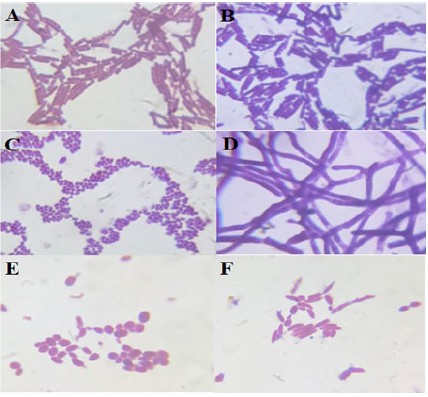
Background: Traditional dried seeds are widely consumed as staple foods and spices in Bangladesh. Traditional salt-fermented grains and spice seeds are rich sources of diverse microorganisms, including lactic acid bacteria (LAB) and yeasts; many of them possess probiotic properties. The aim of this study is to characterize these microorganisms to identify suitable probiotic candidates for functional applications. Methods: Total twenty-seven varieties of dried seeds collected from local markets in Dhaka were fermented traditionally using 3% NaCl for 3–5 days at ambient temperature (25–35 °C). Isolates were obtained by enrichment in de Man, Rogosa and Sharpe (MRS) broth for bacteria and potato dextrose (PD) broth for yeasts, followed by streaking on MRS and PD agar plates. Distinct single colonies were identified through morphological observation, Gram staining, and short biochemical tests. All isolates were characterized for probiotic properties by acid and salt tolerance, temperature tolerance, sugar fermentation tests and antibacterial activity. Results: Total 27 lactic acid bacteria and 4 yeasts from 27 samples were isolated and were presumptively identified as Lactobacillus spp., Lactococcus spp., and yeasts. All identified LAB demonstrated strong survival under highly acidic (pH 1.5) and alkaline (pH 8.5) conditions, high salinity (up to 6% NaCl), and a wide temperature range (4–55 °C). The selected bacteria showed promising antibacterial properties against pathogenic bacteria. Conclusion: Traditional salt-fermented grains and spice seeds have been shown to be sources of diverse microorganisms, including lactic acid bacteria (LAB) and yeasts and have probiotic potential.
References
Angmo, K., Kumari, A., & Bhalla, T. C. (2016). Probiotic characterization of lactic acid bacteria isolated from fermented foods and beverage of Ladakh. LWT – Food Science and Technology, 66, 428–435. https://doi.org/10.1016/j.lwt.2015.10.057
Begley, M., Hill, C., & Gahan, C. G. M. (2005). Bile salt hydrolase activity in probiotics. Applied and Environmental Microbiology, 71(12), 8729–8738. https://doi.org/10.1128/AEM.72.3.1729-1738.2006
Ayyash, M. M., Abdalla, A. K., AlKalbani, N. S., Baig, M. A., Turner, M. S., Liu, S. Q., & Shah, N. P. (2021). Invited review: Characterization of new probiotics from dairy and nondairy products—Insights into acid tolerance, bile metabolism and tolerance, and adhesion capability. Journal of Dairy Science, 104(8), 8363-8379. 10.3168/jds.2021-20398
Holt, J. G. (1994). Bergey’s manual of determinative bacteriology (9th ed.). Lippincott Williams & Wilkins.
Dunne, C., O'Mahony, L., Murphy, L., Thornton, G., Morrissey, D., O'Halloran, S., ... Collins, J. K. (2001). In vitro selection criteria for probiotic bacteria of human origin: Correlation with in vivo findings. The American Journal of Clinical Nutrition, 73(2), 386S–392S. https://doi.org/10.1093/ajcn/73.2.386S
FAO/WHO. (2002). Guidelines for the evaluation of probiotics in food. Joint FAO/WHO Working Group Report. https://isappscience.org/wp-content/uploads/2019/04/probiotic_guidelines.pdf
Gaggia, F., Di Gioia, D., Baffoni, L., & Biavati, B. (2011). The role of protective and probiotic cultures in food and feed. Research in Microbiology, 162(8), 715–725. http://dx.doi.org/10.1016/j.tifs.2011.03.003
Ghanbari, M., Jami, M., Kneifel, W., & Domig, K. J. (2013). Antimicrobial activity and partial characterization of bacteriocins produced by lactobacilli isolated from Sturgeon fish. Food Control, 32(2), 379-385. http://dx.doi.org/10.1016/j.foodcont.2012.12.024
Hill, C., Guarner, F., Reid, G., Gibson, G. R., Merenstein, D. J., Pot, B., ... Sanders, M. E. (2014). The International Scientific Association for Probiotics and Prebiotics consensus statement on the scope and appropriate use of the term probiotic. Nature Reviews Gastroenterology & Hepatology, 11(8), 506–514. http://www.nature.com/doifinder/10.1038/nrgastro.2014.66
Hossain, M. I., Sadekuzzaman, M., & Ha, S. D. (2019). Probiotics as potential alternative biocontrol agents in the food industry. Food Science and Biotechnology, 28(6), 1781–1790. 10.1016/j.foodres.2017.07.077
Kumura, H., Tanoue, Y., Tsukahara, M., Tanaka, T., & Shimazaki, K. (2004). Screening of dairy yeast strains for probiotic applications. Journal of Dairy Science, 87(12), 4050-4056. https://doi.org/10.3168/jds.S0022-0302(04)73546-8
Lebeer, S., Vanderleyden, J., & De Keersmaecker, S. C. (2008). Genes and molecules of lactobacilli supporting probiotic action. Microbiology and Molecular Biology Reviews, 72(4), 728-764. https://doi.org/10.1128/mmbr.00017-08
Leboffe, M. J., & Pierce, B. E. (2015). A photographic atlas for the microbiology laboratory (4th ed.). Morton Publishing Company. https://archive.org/details/microbiologylabo0000lebo_y6i3
Lin, W. H., Yu, B., Jang, S. H., & Tsen, H. Y. (2007). Different probiotic properties for Lactobacillus fermentum strains isolated from swine and poultry. Anaerobe, 13(3–4), 107–113. https://doi.org/10.1016/j.anaerobe.2007.04.006
MacFaddin, J. F. (2000). Biochemical tests for identification of medical bacteria. Lippincott Williams & Wilkins.
Montet, D., & Ray, R. C. (Eds.). (2017). Fermented foods: Part I. Biochemistry and biotechnology. CRC Press.
Rahman, M. M., Islam, S., & Alam, M. S. (2021). Traditional food processing and fermentation practices in rural Bangladesh. Journal of Ethnic Foods, 8, 10.
Sanders, M. E., Merenstein, D. J., Reid, G., Gibson, G. R., & Rastall, R. A. (2019). Probiotics and prebiotics in intestinal health and disease: From biology to the clinic. Nature Reviews Gastroenterology & Hepatology, 16(10), 605–616. https://doi.org/10.1038/s41575-019-0173-3
Rezac, S., Kok, C. R., Heermann, M., & Hutkins, R. (2018). Fermented foods as a dietary source of live organisms. Frontiers in Microbiology, 9, 1785. https://doi.org/10.3389/fmicb.2018.01785
Tamang, J. P., Holzapfel, W. H., Shin, D. H., & Felis, G. E. (2017). Microbiology of ethnic fermented foods and alcoholic beverages of the world. Frontiers in Microbiology, 8, 1377. https://doi.org/10.3389/fmicb.2017.01377
Tamang, J. P. (Ed.). (2024). Microbiology and health benefits of traditional alcoholic beverages. Elsevier.